
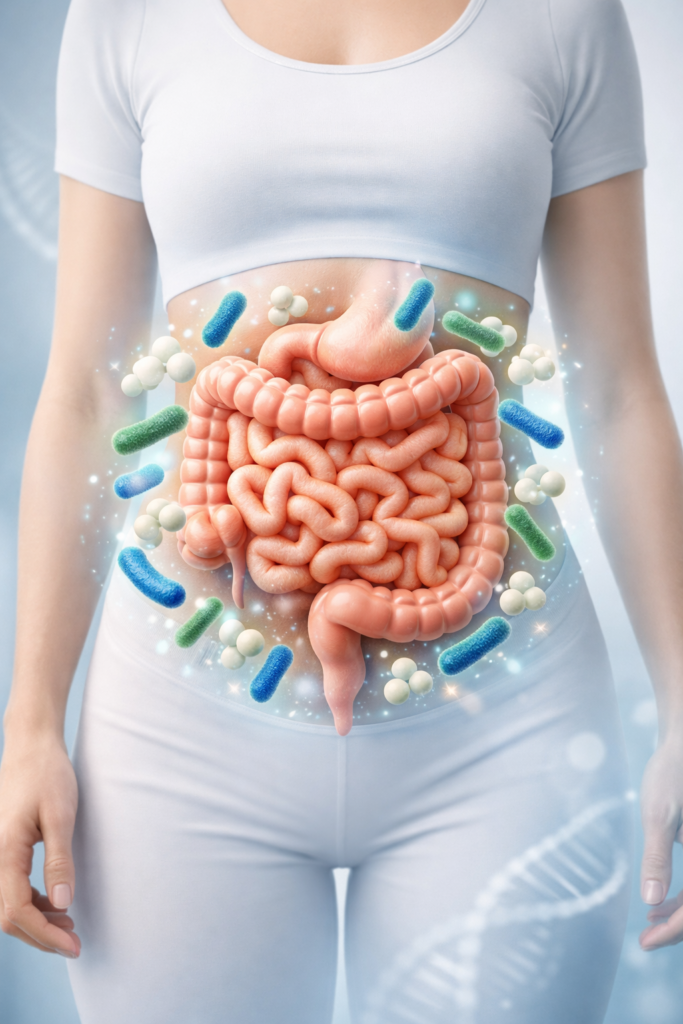
Probiotics are live microorganisms that, when administered in adequate amounts, confer a beneficial effect on the health of the host. Unlike adaptogens, which are plant-derived compounds, probiotics represent a distinct biological and regulatory category. There are no scientific publications or regulatory authority statements that classify probiotics as adaptogens.
A liquid probiotic containing 19 carefully selected bacterial strains acts through well-defined physical and biochemical mechanisms within the gut.
After ingestion, probiotic bacteria adhere to the intestinal epithelium, occupying biological niches and limiting access for pathogens. At the same time, they compete with undesirable microorganisms for nutrients, thereby inhibiting their growth. Probiotics also produce short-chain fatty acids (SCFAs), such as lactic and butyric acid, which lower intestinal pH, support regeneration of the intestinal barrier, and serve as an energy source for enterocytes.
Another key mechanism is the production of bacteriocins —natural antimicrobial substances that directly damage the cell membranes of pathogens. Concurrently, probiotics increase the expression of tight junction proteins (including occludin and claudin), strengthening the intestinal barrier and reducing the translocation of toxins into the bloodstream.
Probiotics also modulate the immune system by interacting with receptors on immune cells in the gut. This results in regulation of inflammatory responses and improved production of IgA antibodies. Through their metabolites, they also influence the gut–brain axis, participating in processes related to neurotransmitters such as serotonin and GABA.
The liquid form of a probiotic facilitates even distribution of bacteria throughout the gastrointestinal tract and represents a convenient solution for long-term support of gut microbiome balance—especially during periods of increased physiological stress.