
We live in times of constant pressure. Deadlines, responsibility, expectations, and a fast-paced lifestyle have made stress a daily reality rather than a temporary state for many people. The problem is that that the human body is not designed to function in a permanent state of alarm..
An increasing number of studies and clinical observations show that chronic stress affects not only mental well-being, but also the functioning of the entire body— including the gut and the immune system, which form the foundation of health.
How does stress affect the body?
Stress itself is not inherently “bad.” In the short term, it mobilizes the body and helps us respond to challenges. The problem arises when stress persists for months or years..
Chronic stress:
- increases cortisol levels,
- weakens the body’s regenerative capacity,
- disrupts sleep and metabolic processes,
- affects immune function,
- negatively impacts the gut and gut microbiota.
Over time, the body begins to “pay the price” through reduced immunity, chronic fatigue, digestive problems, and low-grade inflammation.
The gut – the center of immunity and balance
Approximately 70% of the immune system’s cells are located in the gut.This is where an invisible but essential process takes place every day: protection against pathogens, regulation of inflammatory responses, and communication with the nervous system via the gut–brain axis.
Under chronic stress:
- gut microbiota diversity decreases,
- beneficial bacteria are reduced,
- the gut becomes more susceptible to inflammation,
- the body copes less effectively with physical and mental strain.
Therefore, supporting gut health is not a trend,but a conscious element of preventive healthcare.
Probiotics and postbiotics – what are they and how do they support the body?
Probiotics
These are live bacterial cultures that help to:
- rebuild the gut microbiota,
- support natural digestive processes,
- strengthen the intestinal barrier,
- support immune function.
Postbiotics
These are bioactive metabolites produced during bacterial fermentation. They act as “ready-to-use support” for the body — gentle, well absorbed, and not dependent on bacterial colonization.
Postbiotics:
- support gut balance,
- help regulate inflammatory responses,
- are well tolerated even by weakened organisms,
- complement probiotic supplementation.
Why does a 19-strain bacterial formula matter?
Each bacterial strain has different properties and functions. Greater diversity means broader and more comprehensive support for the body.
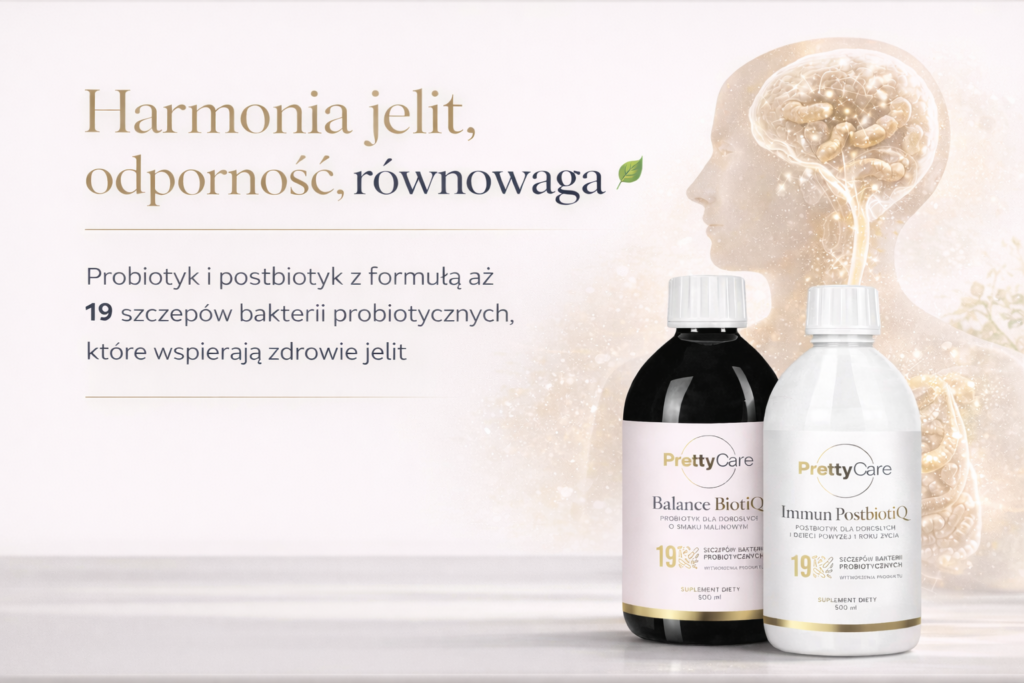
PrettyCare formulations based on 19 strains of bacteria:
- support the gut microbiota through multiple pathways,
- address diverse intestinal needs,
- better reflect the natural diversity of the gut ecosystem,
- are particularly valuable during periods of prolonged stress.
They are designed for people who:
- work under constant pressure,
- live in ongoing mental or emotional tension,
- have limited time for recovery,
- want to support their bodies consciously on a daily basis.
Education instead of promises
It is important to state clearly:
Probiotics and postbiotics do not treat cancer and do not replace medical treatment..
They may, however:
- support gut health,
- strengthen immune function,
- help the body cope better with stress,
- serve as part of everyday health prevention.
Health is a process—not a single decision.
When is gut support worth considering?
- during chronic stress,
- during intense mental or physical workload,
- with stress-related digestive issues,
- during periods of reduced resilience,
- as part of a conscious, health-focused lifestyle.
Summary
Stress is part of life.
!!! Chronic stress does not have to be the norm..
Caring for the gut means caring for immunity, regeneration, and overall balance. Probiotics and postbiotics based on 19 bacterial strains can provide meaningful support for people who live intensely, work under pressure, and want to take care of their health before the body is forced to say “enough.”
Because health does not begin when something goes wrong.
It begins when you choose to take care of it.