
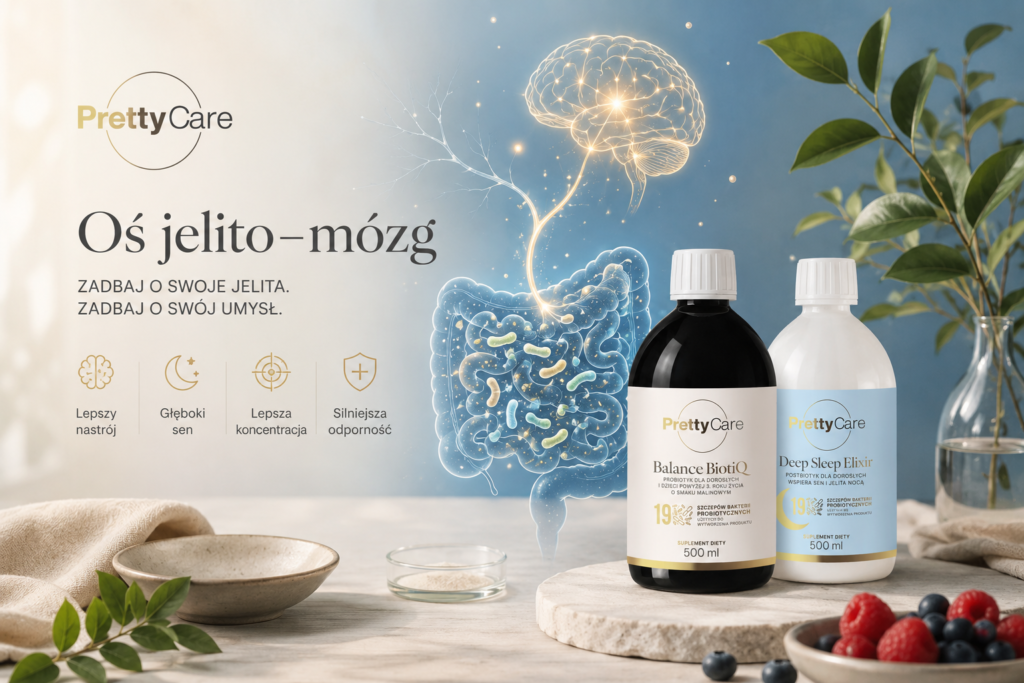
A movement that is changing medicine: everything you feel in your mind begins in your gut. And vice versa.
Have you ever felt “butterflies in your stomach” before an important meeting? Or experienced stomach discomfort on a particularly stressful day? Or perhaps after a sleepless night you felt not only tired, but also in a worse mood than usual?
It’s not a coincidence. It’s science.
Your gut and your brain are connected far more deeply than was once believed. What happens in your gut can directly influence how you think, how you feel, and how you cope with work, difficult conversations, and everyday challenges.
In this article, I’ll show you how this fascinating connection works, why the gut microbiota is considered one of the most important “organs” in your body, and what you can do to support both sides of this relationship. 💚
What Is the Gut–Brain Axis? A Short and Surprising Introduction
Imagine that your gut has its own nervous system. Not as a metaphor — literally. The intestines are surrounded by a network of more than 200 million neurons - more than are found in the spinal cord. That is why scientists often refer to the gut as “the second brain”.
The two brains are connected by the vagus nerve one of the longest neural connections in the body. It runs from the brainstem all the way to the gut, transmitting information in both directions around the clock. This is not an occasional connection. It is a constant, uninterrupted stream of signals.
And what is particularly interesting: as much as 80–90% of all signals travel from the gut to the brain, not the other way around. The gut informs the brain about its condition — it is not simply the brain directing the gut.
“Your gut doesn’t react to your mood. Your mood reacts to your gut.”
Serotonin: The “Feel-Good” Hormone Lives… in Your Gut
When you think of serotonin, you probably picture the brain. Yet as much as approximately 90% of the body’s serotonin is produced in the gut. Not the brain. The gut.
Serotonin is a neurotransmitter involved, among other things, in:
😊 Feelings of well-being and emotional balance
😴 Sleep quality and regular sleep patterns
🎯 Concentration and mental clarity
🍽️ Appetite and feelings of satiety
⚡ Energy levels throughout the day
When the gut microbiota is in balance, serotonin production can proceed efficiently. When the microbiota becomes disrupted, imbalances may arise that you can feel in your mood, focus, and overall well-being — even if your gut is not causing any noticeable discomfort.
What Happens When the Microbiota Is Out of Balance?
Each of us has more than 38 trillion microorganisms - bacteria, fungi, and viruses that form a unique ecosystem. When this ecosystem is healthy, it works for you. When it becomes imbalanced, it may begin to work against you.
The symptoms of an imbalanced microbiota often confuse people because they do not necessarily affect the gut directly:
Brain and emotions:
- Chronic anxiety – a tendency to slip into anxious states easily
- Mood swings – irritability without an obvious reason
- Difficulty concentrating – difficulty thinking clearly, “brain fog”
- Poorer sleep quality – difficulty falling asleep or sleep that does not feel restorative
Body and immunity:
- Reduced immunity – frequent infections and prolonged recovery periods
- Chronic fatigue – persistent exhaustion despite getting rest
- Digestive problems – bloating, discomfort, and irregular bowel habits
- Poorer skin condition – skin that reacts sensitively to stress or dietary changes
The good news is that the microbiota is highly adaptable. It can be supported, restored, and strengthened — and improvements in its balance can directly influence how you feel on a daily basis.
How to Support the Gut–Brain Axis? Practical Steps You Can Take
Supporting your microbiota is one of the best gifts you can give to your everyday well-being. Here’s where to start:
🥗 Eat a varied diet the greater the variety of plant-based foods in your diet, the richer and more diverse your microbiota tends to be.
Cel: 30 różnych roślin tygodniowo.
💧 Nawadniaj się – woda wspiera tranzyt jelitowy i środowisko dla dobrych bakterii.
🛌 Dbaj o sen – śpij regularnie, o stałych porach. Mikrobiota ma swój zegar biologiczny.
🚶 Ruszaj się codziennie – nawet 30 minut spaceru dziennie przynosi korzyści dla mikrobiomu.
🧘 Zarządzaj stresem – techniki oddechowe, mindfulness i kontakt z naturą mają mierzalny wpływ na mikrobiotę.
💚 Wesprzyj mikrobiotę od środka – naturalne postbiotyki i probiotyki dostarczają organizmowi tego, czego potrzebuje najbardziej.
Wsparcie od środka: podejście Pretty Care 💚
W Pretty Care wierzymy, że prawdziwa równowaga zaczyna się w jelitach. Dlatego nasze produkty zostały stworzone z myślą o wsparciu mikrobiomu na poziomie, który ma realne przełożenie na samopoczucie.
Nasze płynne postbiotyki i probiotyki to fermentowane esencje z naturalnych składników, oparte na 19 szczepach bakterii i wzbogacone o bioaktywne metabolity powstające podczas fermentacji. Forma płynna oznacza wyższą biodostępność składniki aktywne trafiają tam, gdzie są potrzebne, znacznie szybciej niż w kapsułkach.
🌿 Immun PostBiotiQ – płynny postbiotyk wspierający odporność i równowagę mikrobiomu jelitowego.
🍇 Balance BiotiQ – probiotyk o smaku malinowym, który pomaga przywrócić harmonię jelitowej flory.
🌙 Deep Sleep Elixir – wieczorny eliksir wyciszający, który działa na oś jelito-mózg i wspiera regenerujący sen.
✨ AntyOxy PostBiotiQ – antyoksydacyjna formuła fermentowana, która chroni komórki przed stresem oksydacyjnym.
Każdy produkt to efekt współpracy nauki i natury. Tworzone razem z dr Justyną Piechocką i prof. Darią Szymanowską, bo wierzymy, że połączenie serca i wiedzy daje najlepsze rezultaty.